New Research Confirms Working Birds Support Healthy Land Management
Back to blog feedIn the expansive shortgrass prairie of Colorado, raptors have acted as precise guardians of the land for centuries. A recent study, detailed in a 52-page report titled "Working Birds for Working Lands," conducted in collaboration with Palmer Land Conservancy and Colorado College, confirms what many land stewards have long believed: supporting bird populations enhances the resilience of the land and improves natural pest control.
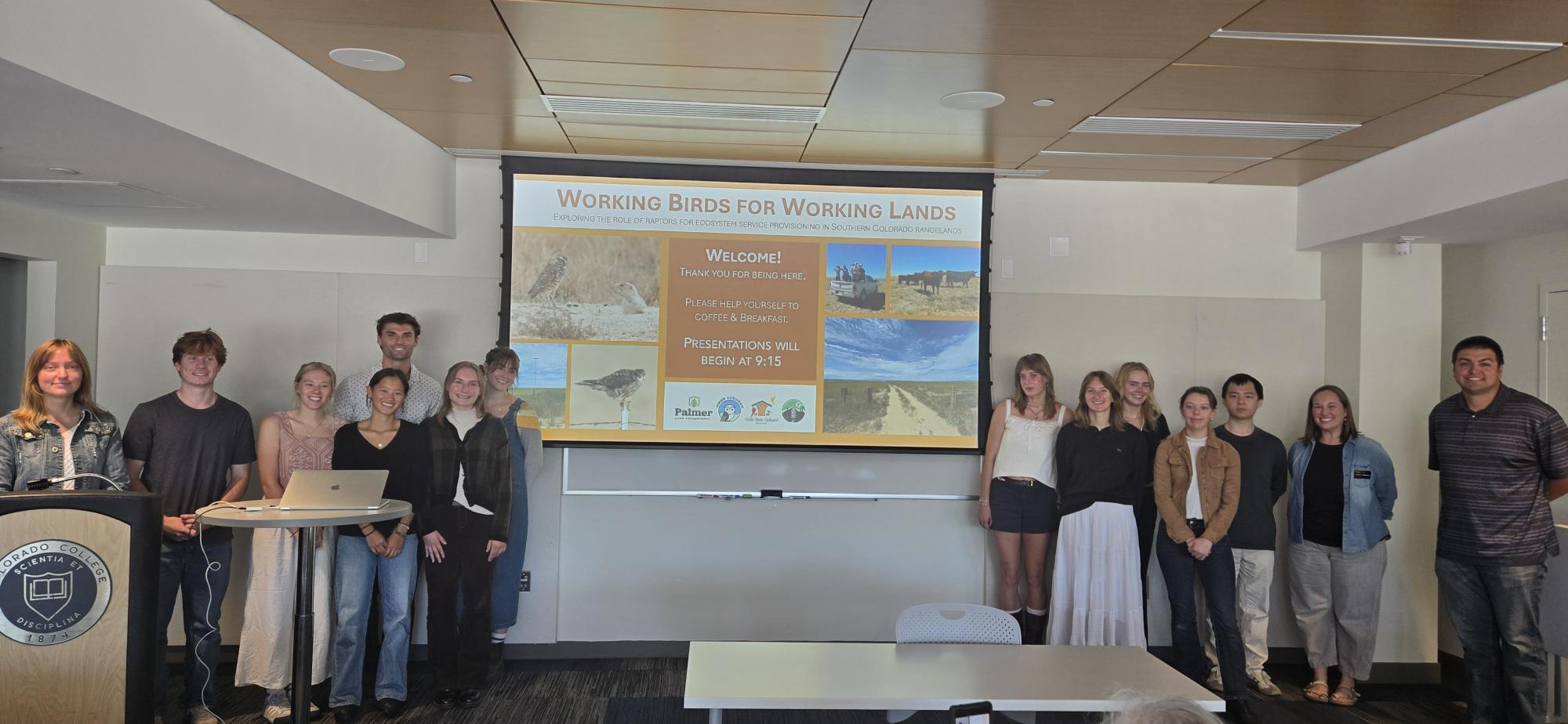
This research expands on a partnership between Colorado College and Palmer, bridging the gap between academic rigor and on-the-ground land management. By combining cutting-edge technology with practical, low-cost solutions, we're proving that supporting raptor populations isn't just good for conservation—it's smart business for Colorado's agricultural producers.
The "Aha" Moment: Why Raptors Need Our Help
One of the most significant findings in the research involves a simple bottleneck in nature. While eastern Colorado's rangelands offer prime hunting grounds and an abundance of prey like prairie dogs, the population density of raptors is often limited by a lack of places to perch and nest.
As the report states: "Although the rangelands of eastern Colorado, in which our study is focused, provide excellent hunting opportunities for many raptors, the limited availability of suitable perching and nesting infrastructure constrains their population density."
The intervention is straightforward but transformative: by expanding agricultural infrastructure with inexpensive raptor poles and nest boxes, we can greatly improve habitat for birds of prey. These structures act as invitations for our sky-bound partners to settle in areas where they can do the most good. By providing birds of prey with the vantage points they need, we turn open fields into active management zones where nature handles the heavy lifting of pest control.
Interestingly, agricultural operations themselves create essential habitat. Without the buildings, telephone poles, and fenceposts that dot working landscapes, raptor populations would likely decline. Working lands and wildlife aren't in competition—they're collaborators.
High-Tech Stewardship: Drones and Data Drive Conservation
In 2025, Palmer received a grant from Aiken Audubon Society, along with the generous donation of 35 nest boxes from Wild Birds Unlimited, to expand bird infrastructure on conserved properties. Through the partnership with Colorado College, Palmer’s land stewardship team had the capacity to collect data on the effects of the bird infrastructure installation. Leveraging Colorado College's unique block plan schedule, students and faculty conducted intensive research that would be unfeasible for a nonprofit to execute alone. The block plan allows students to dedicate focused time to large-scale literature reviews and field studies, creating a professional project scope that benefits both the college and Palmer.
Using drone technology, the team collected baseline data on vegetation health and prairie dog colony density across multiple properties. This high-tech approach allows Palmer to move beyond assumptions and make evidence-based decisions about conservation practices.
"Proper data collection drastically reduces bias in conservation practice applications and allows Palmer to assess what strategies are working, which are lacking, and how those strategies may be integrated alongside our landowner partners into the future," explained Theron Verna, Palmer's program manager.
As Verna noted, "Without the students, there is no Working Birds report." This collaboration allows Palmer to cultivate the next generation of conservation leaders while delivering professional-grade results that benefit landowners today.
Nature's Pest Control: The Ferruginous Hawk at Work
The report identifies the ferruginous hawk as a primary ally for Colorado ranchers facing prairie dog challenges. As a "sit and wait" ambush predator, this hawk is perfectly suited for the raptor poles installed near prairie dog colonies. Because prairie dogs make up a significant portion of their diet, and they prefer hunting in vegetation heights that correspond to prairie dog colonies, these hawks provide tangible economic and ecological services.
However, ferruginous hawks are more sensitive to human disturbance than other raptor species. This finding helps landowners assess which operations would be most attractive to this species and how they might leverage these sky-bound partners for biological pest control on their property.
For producers, this represents Integrated Pest Management at its finest. It's ecologically friendly, avoids the costs and risks of chemical baiting, and is entirely passive—these raptors work all day while ranchers focus on the myriad other tasks of running an operation.
The report even includes user-friendly matrices and tables to help landowners identify which raptor species are best suited for their specific landscape and pest challenges. These practical resources transform complex research into actionable strategies that producers can implement tomorrow.
From Research to Real-World Results
The impact of this research extends far beyond a single ranch or a single season. Healthy bird populations are a thread in the larger food web, contributing to biodiversity, soil health, and the dynamic equilibrium that creates resilient agricultural operations capable of withstanding varying weather conditions and pest population spikes.
Palmer's work on this project is just beginning. As Theron Verna shared, Palmer is moving into Phase 2 of the Working Birds initiative:
- Continuing to install nest boxes across Palmer's 150,000-plus-acre portfolio alongside willing landowners
- Installing educational signage related to birds and their key role in landscape health at Mesa Valley Wildlife Preserve
- Sharing video and photos of birds and other wildlife on Palmer fee-owned properties through game cameras for educational and research purposes
- Partnering with Colorado College in upcoming years to collect subsequent drone data for analysis on the effectiveness of raptor poles and their effect on prairie dog colonies
The baseline data collected in this initial study will be compared against future measurements, providing concrete metrics on the effectiveness of these structures over time. This long-term commitment to monitoring ensures that Palmer's conservation recommendations continue to evolve based on evidence.
Healthy agricultural lands also benefit downstream communities by improving water quality, reducing erosion, and reducing the presence of invasive species. When we support these sky-bound partners, we're investing in benefits that ripple throughout entire watersheds and ecosystems.
A Partnership Model for Conservation
This research confirms a vital truth—what is good for the birds is good for the rancher, and what is good for the rancher is good for Colorado. By assisting these precision guardians of the prairie, we're ensuring that our working lands remain healthy, productive, and wild for generations to come.
The collaboration between Palmer Land Conservancy and Colorado College represents more than just a research project—it's a model for how conservation organizations can partner with academic institutions to advance conservation goals while building the next generation of environmental leaders.
As we look to the future, this data-driven approach to conservation sets the stage for additional work where scientific research, community partnerships, and practical land management come together to create lasting positive change for Colorado's working landscapes.

A FILM ABOUT WATER, LAND, AND A WAY OF LIFE
We are delighted to announce the full film is now available to watch for FREE online!